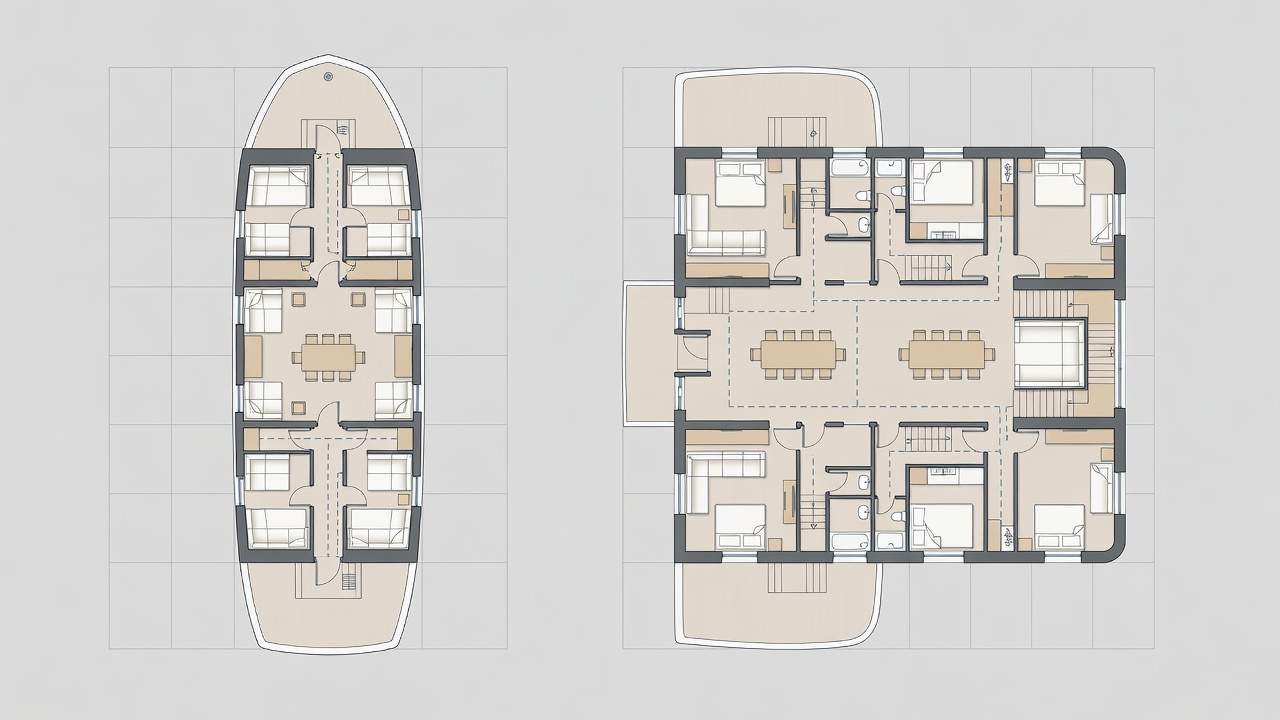
A charter yacht is a temporary household, a working vessel and a hospitality setting at the same time. A successful choice reconciles all three. Photographs may communicate atmosphere, but they rarely explain whether two families can settle comfortably, how a tender transfer works, or which cabins are affected by early crew movements. Begin with the routines you want to protect, then ask for evidence that the proposed yacht supports them.
Write the party into the plan
List everyone expected aboard, including children, and distinguish overnight guests from any visitors anticipated in port. Ask the contracting broker to confirm the yacht’s permitted guest numbers and the conditions attached to day visitors. Do not treat the number of beds as proof of the number of guests that may legally be carried. Flag any likely change in the party before agreeing to the charter.
Next, assign cabins on paper. Couples may want comparable accommodation; friends travelling alone may prefer separate beds; parents may need a cabin close to children. Check whether a convertible arrangement genuinely suits the intended occupants and whether access to a bathroom requires passing through another space. Request a current general arrangement and confirmation of any changes since the published photographs were taken.
Imagine an ordinary day aboard
Trace the route from each cabin to breakfast, from the dining table to the swimming platform, and from the tender boarding point back inside. Notice stairs, changes in level, door widths and the distance to a sheltered seat. For anyone with reduced mobility, ask for measured details and a conversation about transfers. A description such as accessible or family friendly is not a substitute for the specific arrangement your party needs.
Outdoor space should be assessed for usable shade, wind protection and seating rather than deck area alone. Ask whether the whole party can dine together inside and outside. Consider where someone can read quietly while others socialise. If remote work is unavoidable, clarify the workspace and connectivity limitations; coverage, equipment and service plans can vary, and uninterrupted internet should never be assumed at sea.
Compare platforms without stereotypes
A motor yacht may support a different passage pattern from a sailing monohull, but performance depends on the actual vessel, sea conditions and operating decisions. Discuss expected cruising behaviour rather than quoting maximum speed as the itinerary’s foundation. Faster passages can affect fuel expenditure and comfort. The captain’s realistic passage estimates are more useful than an ambitious line drawn between distant ports.
A sailing yacht introduces the experience of sailing itself, along with considerations such as heeling, deck movement and equipment access. A catamaran can offer a broad living platform and separated cabin areas, yet beam may influence berth options and charges. Neither category is automatically the comfortable or economical choice. Ask how the particular yacht behaves in its intended operating area and what compromises its layout introduces.
Read the supporting operation
Crew composition affects service, supervision and the management of equipment. Ask what activities the crew can support, what qualifications or external providers may be required, and which watersports depend on local rules. A tender’s passenger limit, storage position and boarding method can shape the day more than an attractive equipment list. Childcare should be discussed explicitly; the presence of a professional crew does not imply a childcare service.
Technical and regulatory checks belong with the appropriate broker, manager and professional advisers. Request confirmation that the yacht is properly authorised, insured and crewed for the intended commercial operation. Standards such as the Maritime Labour Convention and applicable flag-state requirements may form part of that conversation, but their application depends on the vessel. This guide does not certify a yacht or replace document review.
Close the comparison with a written fit note
For each candidate, record the features that support your brief, the unresolved questions and the compromises you would accept. Separate essential requirements from preferences so that a visually impressive feature does not displace an important practical need. Confirm the condition and availability of any feature central to your decision in the contractual process rather than relying on a generic brochure.
The useful next step: carry your chosen platform and its limitations into the route discussion. Vessel suitability and passage feasibility are one decision viewed from two directions.