The most persuasive charter route often contains fewer destinations than the first draft. Time at anchor, an unhurried lunch and the ability to stay somewhere unexpectedly appealing are part of the experience, not gaps in the programme. Start by describing how the guests want to feel at the end of each day. Then test the geography against the yacht, the season and the operating team’s advice.
Choose the region through the experience
The French Riviera can support a brief built around ports, restaurants and short transitions, although berth access and congestion require attention. The Balearic Islands may suggest a different balance of bays, beach visits and passages. Neither region promises calm water, empty anchorages or automatic access to a favourite venue. State which experiences are essential and which are attractive possibilities so the planning team can distinguish them.
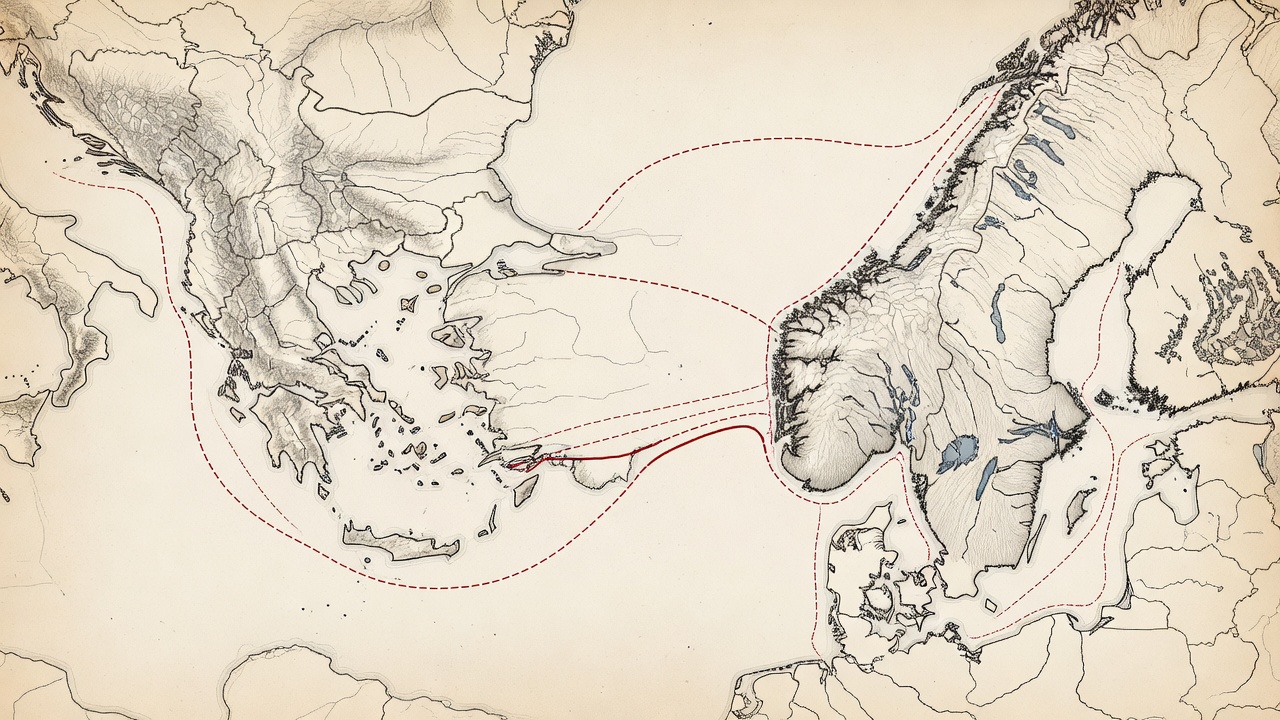
In Greece, a proposal involving Athens, Kea, Syros and Paros should be tested as a passage concept rather than accepted as a neat island sequence. Seasonal winds in the Aegean can materially change comfort and timing. The Saronic Gulf may be worth discussing as an alternative context, but suitability still depends on the forecast, vessel and local conditions. Regional familiarity helps frame questions; it does not remove weather risk.
Budget time as carefully as money
A sea passage is not simply distance divided by advertised speed. Departure procedures, speed restrictions, sea state, anchoring decisions and tender transfers affect the usable day. Ask the captain or broker to describe realistic passage ranges for the proposed yacht. Clarify whether passages are expected during breakfast, during daytime activities or overnight, and whether everyone in the party is comfortable with that pattern.
Arrival and departure days need particular care. Airport transfers, provisioning, the safety briefing and contractual embarkation times can leave less cruising time than a calendar suggests. Avoid making a distant dinner reservation the test of a successful first evening. Keep onward flights and other fixed commitments independent of an optimistic final passage, and discuss suitable contingency arrangements with the relevant providers.
Let the coastline change the brief
A Nordic charter asks different questions from a Mediterranean one. A concept linking Bergen with nearby fjord landscapes should consider local operating knowledge, exposure, daylight and the yacht’s permitted area. Geirangerfjord and Nærøyfjord are distinct destinations, not interchangeable additions to any western Norway programme. Distances, visitor rules and practical access need a current assessment before they become contractual expectations.
The Finnish archipelago around Helsinki, the route toward Hanko and the waters around Åland offer another planning context. Sheltered-looking geography does not make a passage straightforward: marked channels, local restrictions and vessel dimensions still matter. Stockholm’s archipelago has its own operating considerations. Select a compact area that supports the intended pace instead of treating several Nordic countries as a single short itinerary.
Agree what happens when plans change
For each important stop, ask for an alternative experience rather than merely another port name. A restaurant evening might become a well-planned dinner aboard; an exposed anchorage might be replaced by a sheltered harbour with a walk ashore. Confirm which reservations carry cancellation charges and who can authorise changes. The financial consequences of flexibility should be as visible as the experiential benefits.
The captain retains authority over safe navigation and operation. Guests should be able to express preferences without being led to believe they can require an unsafe passage. Official weather services, port authorities and current navigational publications inform operational decisions. This website’s schematic drawings and regional examples are not substitutes for charts, passage planning, professional judgement or current local restrictions.
Turn the concept into a usable brief
Record the embarkation area, disembarkation area, preferred pace, essential experiences and tolerance for time underway. Add any meals, flights or events that cannot move. Ask which berths, protected areas, shore activities and cross-border formalities require advance arrangements. For marine protected areas, including parts of the Mediterranean, permits and anchoring rules can determine access more directly than a guest’s preferred timetable.
Set the intention
Choose the experience around which the passage is built.
Test the sequence
Check vessel fit, exposure, permissions and realistic time.
Preserve the choice
Keep credible alternatives and identify associated costs.
The finished itinerary should be a useful shared understanding, not an inflexible promise. Link it to the operating responsibilities and cost assumptions so a change can be explained and approved without confusion.