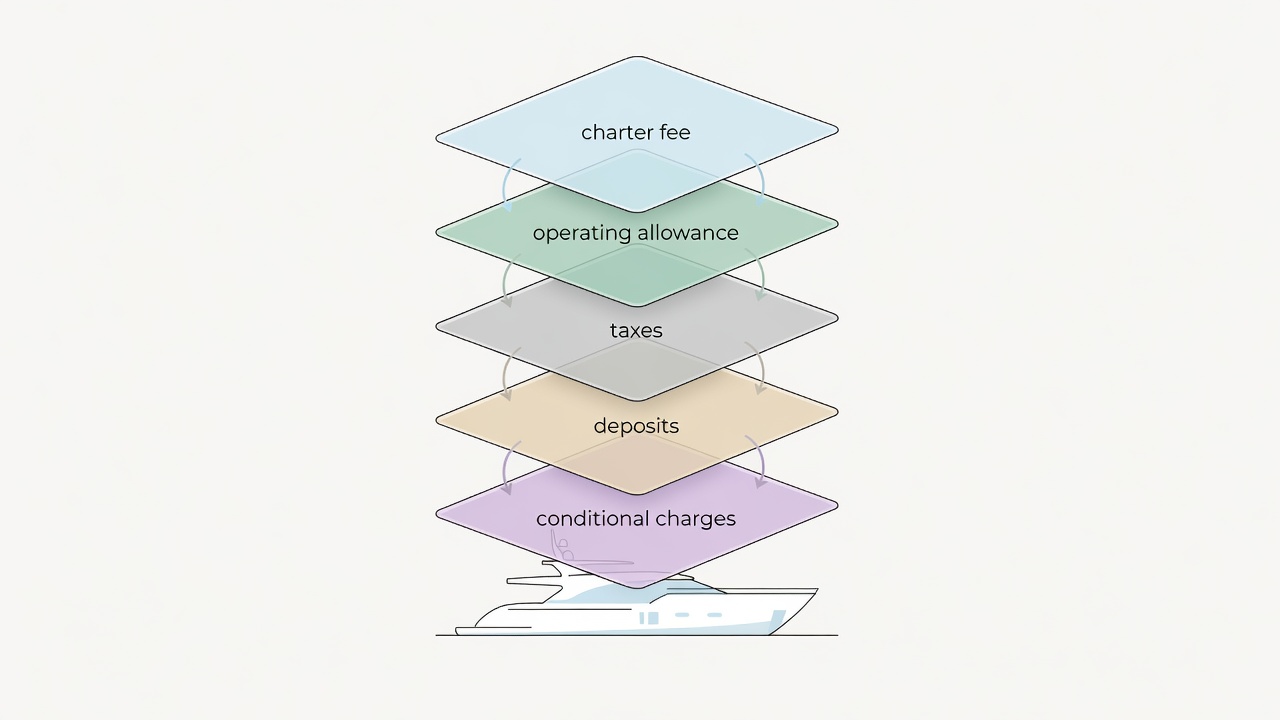
A charter quotation is easier to compare when every amount has a purpose. Some sums purchase the agreed charter period, some fund expenses incurred during it, and others secure obligations that may never become a final cost. Ask for these categories to be shown separately. A single attractive total can conceal assumptions about the route, fuel use, taxes or services that do not match your intended holiday.
Establish the contractual starting point
Identify the contracting parties, the yacht, the charter period and the embarkation and disembarkation arrangements. Confirm the currency, the documents incorporated into the agreement and the order of precedence if terms conflict. A familiar industry form, including a MYBA form where used, still needs to be read alongside its amendments. The name of a form does not explain a particular transaction’s inclusions or allocate every risk automatically.
Check what the base charter fee covers. Crew, yacht equipment and ordinary onboard services may be treated differently from fuel, food, port charges or specialist activities. Arrangements vary between yachts and regions, so avoid importing assumptions from a previous trip. Ask whether delivery or redelivery charges apply if your requested start or finish differs from the yacht’s normal operating position.
Understand money advanced for expenses
An advance provisioning allowance, where applicable, funds expenses defined by the agreement. It should not be confused with a fixed all-inclusive supplement. Ask who holds the funds, how spending is recorded, when account updates are available and how unused money is returned. Understand how additional funds are requested if actual expenditure exceeds the advance, and who may approve exceptional purchases on behalf of the party.
Fuel consumption can be sensitive to speed, distance, generator use and conditions. Berthing, premium provisions and guest-requested activities also affect expenditure. Rather than seeking a universal allowance percentage, request an estimate based on your actual brief and a clear explanation of its assumptions. A shorter route or a different dining pattern can change the estimate without changing the base charter fee.
| Layer | What to clarify | Evidence to request |
|---|---|---|
| Base charter fee | Period, inclusions and exclusions | Written quotation and agreement |
| Operating allowance | Eligible expenses and reconciliation | Estimate and accounting procedure |
| Taxes and levies | Applicable basis and potential changes | Itemised treatment from the provider |
| Security deposit | Permitted deductions and release | Deposit conditions and timing |
| Conditional charges | Delivery, special requests and changes | Written approval and supporting terms |
Keep taxes and deposits distinct
Tax treatment can depend on the jurisdiction, place of supply, cruising arrangements and current rules. Obtain a written explanation from the contracting provider and professional advice where needed. This website does not determine VAT or other tax liabilities. Likewise, a security deposit is not interchangeable with an operating allowance: its purpose, holder, deduction process and release conditions should be identifiable in the agreement.
Ask whether gratuities are discretionary and how they can be handled if you choose to give one. Do not assume that an informal industry convention is a mandatory contractual charge. Shore excursions, premium reservations and independently supplied activities may involve separate contracts, cancellation rules or insurance. Identify these before treating them as seamless parts of the yacht charter.
Read the consequences, not only the dates
Payment schedules create obligations before embarkation. Note what triggers each instalment, the consequences of late payment and the conditions governing cancellation by either party. Weather disruption, breakdown, substitution and changes to the itinerary can be addressed differently. Never assume that a reason for cancelling is automatically covered by insurance or that a provider must offer a particular refund outside the applicable terms and law.
Consider appropriate travel and cancellation insurance with a qualified adviser, disclose relevant circumstances accurately and read exclusions. Before transferring funds, independently verify payment instructions through a trusted channel, particularly if bank details change. An email appearing within an existing conversation is not sufficient verification. This website does not accept charter payments and will not use its brief composer to request a transfer.
Finish with a readable reconciliation
At the end of the charter, compare the agreed arrangements with the expense record and any approved changes. Ask promptly about unexplained items, retain relevant documents and follow contractual procedures for concerns. A clear closing account should distinguish actual expenses, funds already advanced, any additional amount due and money to be returned. The aim is not to remove every variable; it is to know how each variable will be handled.